A retinal reboot for amblyopia
Anesthetizing the retina of a “lazy” eye for just two days can restore vision in mice.
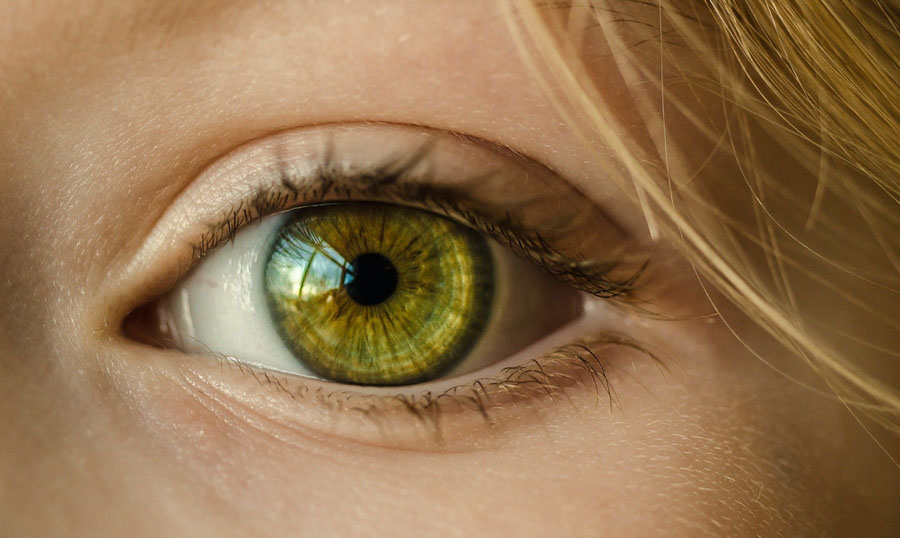
In the vision disorder amblyopia (or “lazy eye”), impaired vision in one eye early in life causes neural connections in the brain’s visual system to shift toward supporting the other eye, leaving the amblyopic eye less capable even if the original impairment is corrected. Current interventions don’t work after infancy and early childhood, when the brain connections are fully formed.
Now a study in mice by MIT neuroscientist Mark Bear and colleagues shows that if the retina of the amblyopic eye is anesthetized just for a couple of days, those crucial connections can be restored, even in adulthood.
Bear’s team, which has been studying amblyopia for decades, had previously shown that this effect could be achieved by anesthetizing both eyes or the non-amblyopic eye, analogous to having a child wear a patch over the healthy eye to strengthen the “lazy” one.
The new study delved into the mechanism behind this effect by pursuing an earlier observation: that blocking the retina from sending signals to neurons in the part of the brain that relays information from the eyes to the visual cortex caused those neurons to fire “bursts” of electrical pulses. Similar patterns of activity occur in the visual system before birth and guide early synaptic development.
The experiments confirmed that the bursting is necessary for the treatment to work—and, crucially, that it occurs when either retina is targeted. After some mice modeling amblyopia had the affected eye anesthetized for two days, the researchers measured activity in the visual cortex to calculate a ratio of inputs from the two eyes. This ratio was much more even in the treated mice, indicating that the amblyopic eye was communicating with the brain about as well as the other one.
A key next step will be to show that this approach works in other animals and, ultimately, people.
“If it does, it’s a pretty substantial step forward, because it would be reassuring to know that vision in the good eye would not have to be interrupted by treatment,” says Bear. “The amblyopic eye, which is not doing much, could be inactivated and ‘brought back to life’ instead.”
Keep Reading
Most Popular
10 Things That Matter in AI Right Now
MIT Technology Review's authoritative overview of the 10 technologies, emerging trends, bold ideas, and powerful movements in AI in 2026.
A new US phone network for Christians aims to block porn and gender-related content
Launching next week on T-Mobile's network, the cell plan takes a nuclear approach to online safety.
Musk v. Altman week 1: Elon Musk says he was duped, warns AI could kill us all, and admits that xAI distills OpenAI’s models
Musk kept his cool, and OpenAI’s lawyer bulldozed him with piercing questions about his motivations for suing the company.
China has approved the world’s first invasive brain-computer chip—here’s what’s next
The country wants to become a global leader in brain implants. Strong government support is expected to help accelerate that process.
Stay connected
Get the latest updates from
MIT Technology Review
Discover special offers, top stories, upcoming events, and more.