Embryo scoring
Genetic testing on embryos is more sophisticated and accessible than ever—and it’s now being sold as a way to let parents pick their future baby’s best traits.
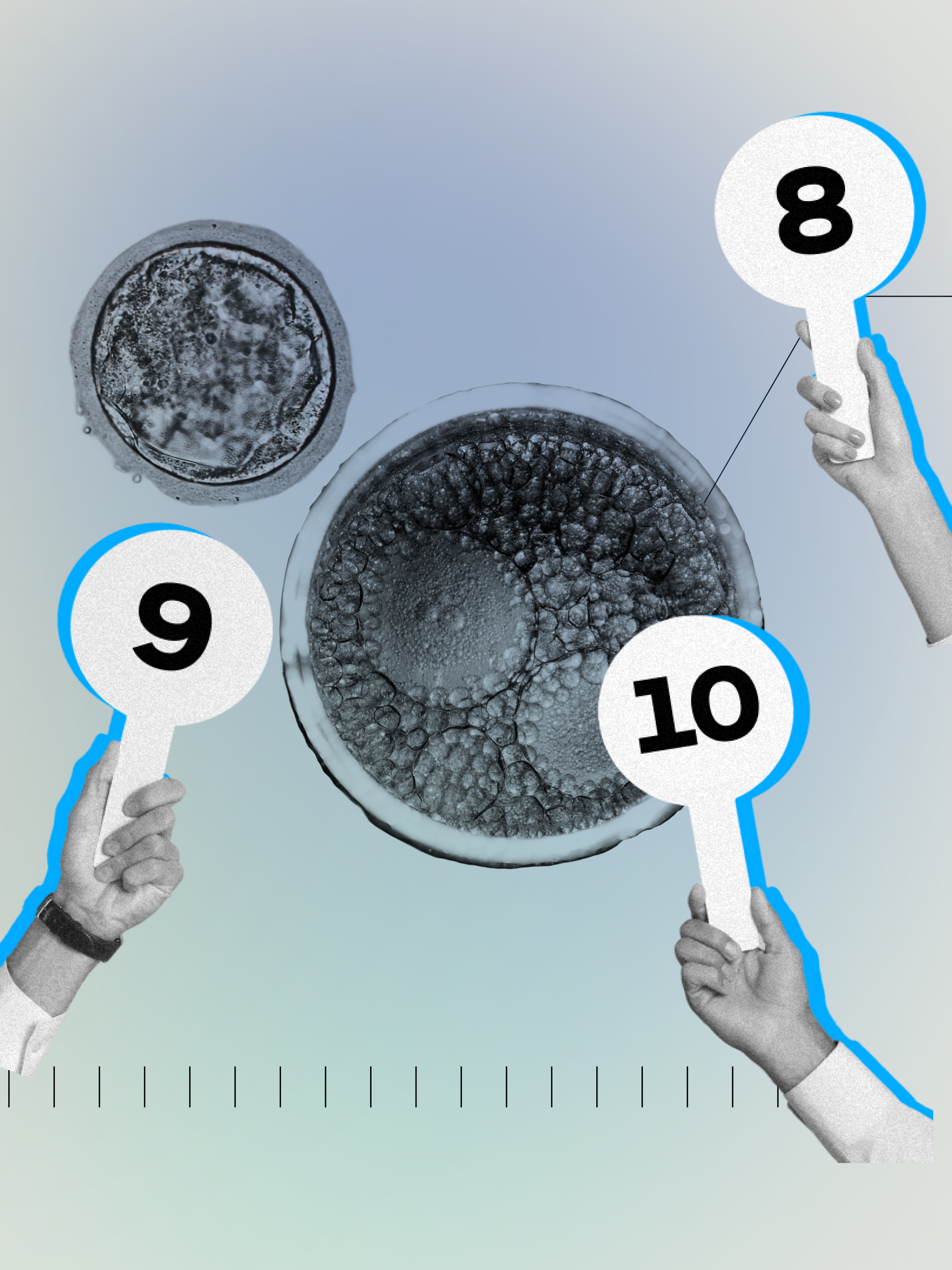
Many Americans agree that it’s acceptable to screen embryos for severe genetic diseases. Far fewer say it’s okay to test for characteristics related to a future child’s appearance, behavior, or intelligence. But a few startups are now advertising what they claim is a way to do just that.
Preimplantation genetic testing (PGT) has been around in some form since the 1990s. And established tests, such as those for chromosomal abnormalities or single-gene disorders, are now becoming more accessible—great news for would-be parents at risk of passing on a severe genetic disease.
In the past few years, startups have begun offering a new form of the technology called PGT-P, or preimplantation genetic testing for polygenic disorders (and, some claim, traits). These are conditions and characteristics that arise out of interactions among hundreds or thousands of genetic variants. The resulting polygenic risk scores offer statistical probabilities that an embryo will develop, say, brown eyes or a high IQ or short stature, presenting potential parents with a way to sift through their “best embryos.”
A company called Genomic Prediction introduced the first clinical application of PGT-P back in 2019. It was followed a few years later by Orchid, which offered a more comprehensive type of sequencing. As they have commercialized, both companies have focused primarily on severe diseases. Then, in 2025, two new competitors—Herasight and Nucleus Genomics—started making bold claims about a wide range of characteristics they could screen for, including intelligence.
Perhaps unsurprisingly, this new kind of testing—which can cost up to $50,000—is incredibly controversial. Some critics warn of eugenics, while others question the clinical utility of these scores. Even proponents acknowledge that they offer probabilities of somewhat limited significance, rather than certainties.
Nevertheless, the practice has grown popular in Silicon Valley, where tech titans like Elon Musk and Peter Thiel have supported companies offering it. Now it’s becoming more widely available to everyone: Today, PGT-P is offered at over 100 fertility clinics in the US. This competition could drive down prices, expand availability, and improve the quality of all PGT services.
Deep Dive
Biotechnology and health
China has approved the world’s first invasive brain-computer chip—here’s what’s next
The country wants to become a global leader in brain implants. Strong government support is expected to help accelerate that process.
Inside interoception: The hidden sense of how you feel inside
Researchers are decoding how signals move between body and brain, with implications for how we understand and treat conditions from obesity to anxiety.
Colossal Biosciences is growing chickens in a 3D-printed artificial eggshell
In an early step towards artificial wombs, a biotech company claims it’s developed a “fully artificial” chicken egg.
The “steroid olympics” were a circus—and a window into our culture
Dozens of athletes on performance-enhancing drugs competed in the Enhanced Games. Organizers hope it'll sell a lot of peptides and other supplements.
Stay connected
Get the latest updates from
MIT Technology Review
Discover special offers, top stories, upcoming events, and more.